
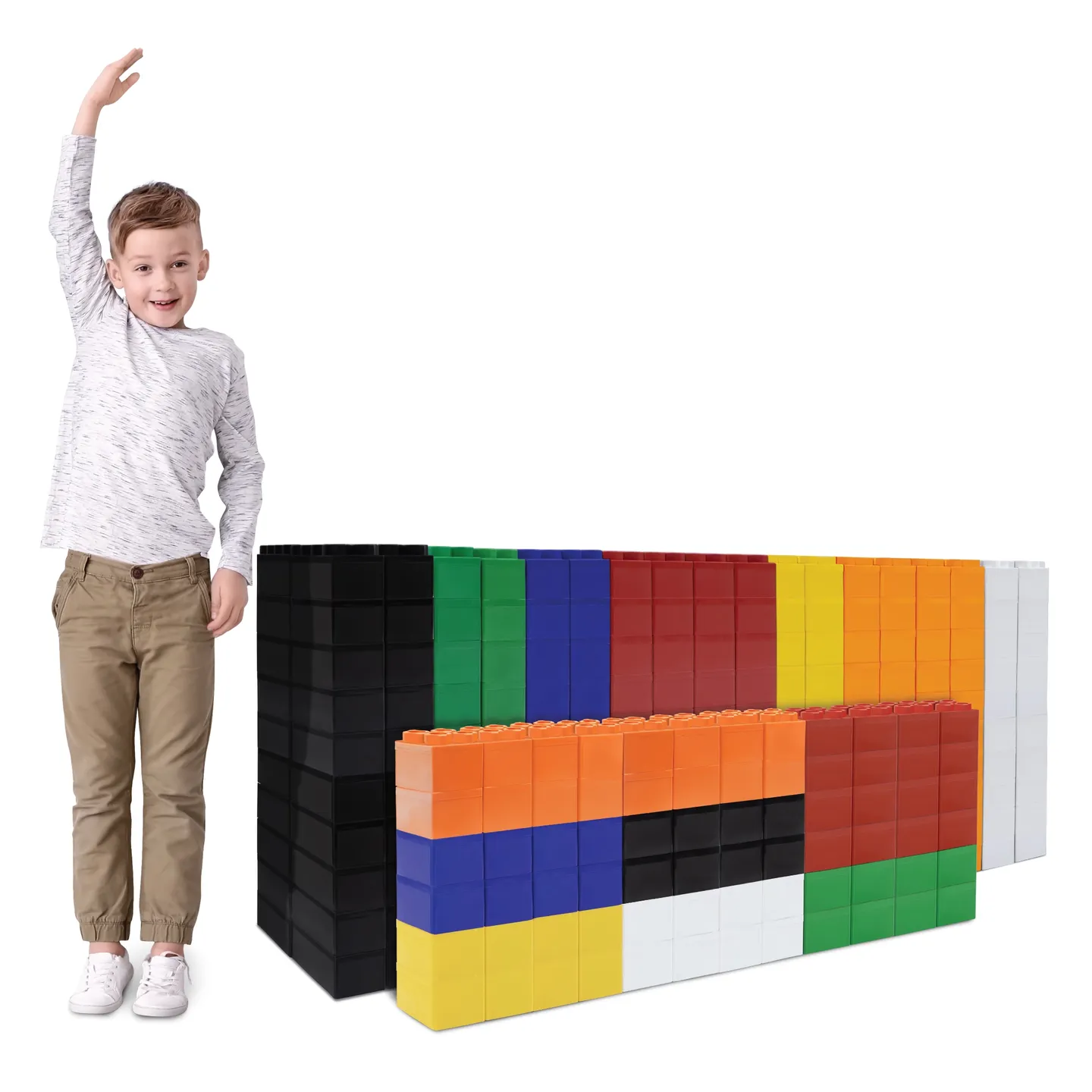
Giant Building Blocks can open the door to a world where children turn simple pieces into castles, cities, spaceships, forts, and imaginary landscapes. Giant Building Blocks encourage hands-on exploration while giving young builders the freedom to decide what they want to create. With Giant Building Blocks, everyday play can become an opportunity to experiment, tell stories, solve problems, and express original ideas. Their open-ended nature makes them a valuable choice for families, classrooms, playrooms, and activity spaces where creativity and imaginative thinking are encouraged.
The Connection Between Building and Imagination
Children naturally use imagination to transform ordinary objects into something extraordinary. A few large construction pieces can become a house for toy characters, a bridge across an imaginary river, or a spaceship traveling through outer space.
Construction play gives children a physical way to express these ideas. Instead of only imagining a story, they can build the setting where the story takes place.
Giant Building Blocks support this process by providing flexible pieces that can be stacked, arranged, separated, and rebuilt. Children can change their creations whenever their stories or ideas change.
Open-Ended Play Encourages Original Thinking
Open-ended play does not have one predetermined outcome. Children can approach the same materials in completely different ways.
One child might build a tall tower, while another may create a small village. Both approaches can demonstrate creativity because children are making independent decisions about their designs.
This freedom can help children become more confident in expressing their ideas without worrying about creating a “perfect” structure. For more information about large building blocks for kids, explore their features, benefits, age suitability, and role in encouraging imaginative and educational play.
Building Creative Confidence
Creativity develops through practice. Children benefit from activities that allow them to experiment without excessive pressure.
Giant Building Blocks give young builders an opportunity to make choices about shapes, layouts, sizes, and structures. They can decide what to build and determine how they want to solve construction challenges.
When children complete a project they designed themselves, they may develop a stronger sense of accomplishment and confidence.
Learning From Mistakes
A structure may collapse or fail to balance properly. Rather than viewing this as a failure, children can treat it as part of the creative process.
They can rebuild the structure with a wider base, change the arrangement, or try a different design.
Giant Building Blocks make repeated experimentation possible because the same pieces can be used again and again. This encourages persistence and teaches children that changing an approach can lead to better results.
Creative Projects With Building Blocks
There are countless projects children can explore. Giving them a theme can provide inspiration while still leaving plenty of room for independent ideas.
A castle project might include towers, walls, gates, and rooms. A city project could feature houses, stores, schools, garages, and roads.
Giant Building Blocks can also become the foundation for pretend environments such as farms, airports, hospitals, restaurants, fire stations, and space centers.
Build an Imagination Station
Create a pretend “imagination station” where children can choose a different theme each time they play. One session might involve building a dinosaur habitat, while another could focus on designing a futuristic city.
Children can add stuffed animals, toy vehicles, figures, books, or other suitable accessories to make the environment more detailed.
This approach transforms a basic construction activity into a complete storytelling experience.
Supporting Problem-Solving Skills
Creative construction naturally involves problem-solving. Children must decide how pieces should be positioned and what changes may be needed when a structure does not work.
Giant Building Blocks allow children to physically test their ideas. They can build a structure, observe the result, and make adjustments.
This process develops flexible thinking because children learn that there can be several solutions to the same construction challenge.
Encourage Children to Experiment
Parents and educators can encourage experimentation by asking open-ended questions.
Instead of saying exactly where a piece should go, ask, “What do you think would make the tower stronger?” or “How could you create another entrance?”
These questions give children opportunities to develop their own solutions while keeping the activity playful.
Developing Spatial Awareness
Construction activities can help children understand spatial relationships. They learn how pieces fit together and how changing one part of a structure can affect another.
Children naturally explore concepts such as height, width, depth, balance, position, and distance during construction.
Giant Building Blocks can make these concepts easier to explore because large pieces create structures that children can see and interact with directly.
Exploring Shapes and Sizes
Different block shapes and sizes can introduce children to basic geometric concepts. They may discover which pieces work well as foundations and which are better suited for walls or decorative features.
Sorting pieces by size or shape can become another creative activity before construction begins.
This combination of organization and building encourages children to observe details and make thoughtful choices.
Storytelling Through Construction
Imagination becomes even stronger when building is connected to storytelling. Once children create a structure, they can invent characters and events that take place inside it.
A castle can become the setting for a fantasy adventure. A garage can become a workshop for toy vehicles. A space station can become the starting point for an imaginary journey to another planet.
Giant Building Blocks provide the physical environment while children create the narrative.
Create Characters and Adventures
Encourage children to give their imaginary characters names, personalities, and goals. Ask what challenges the characters might face and how they could solve them.
This type of pretend play can encourage language development, communication, and creative storytelling.
Children can also work with siblings or friends to develop a shared story, allowing everyone to contribute ideas.
Encouraging Family Creativity
Construction play can become a meaningful family activity. Parents can participate without taking control of the project.
Giant Building Blocks allow families to create larger structures together. One person can construct a wall while another builds a tower or designs the interior.
Collaborative projects encourage children to listen, communicate, share materials, and negotiate different ideas.
Plan a Family Building Challenge
Families can choose a creative goal such as building a miniature town, creating a giant fort, or designing a pretend amusement park.
Instead of focusing on competition, make the challenge cooperative. Everyone can contribute one section to a larger creation.
At the end, children can explain what they built and describe the story behind it.
Creativity in Classrooms and Play Spaces
Construction materials can also be valuable in educational and recreational environments. Teachers and activity leaders can use building projects to introduce creative challenges.
For example, children might be asked to construct a bridge that connects two areas or design a shelter for an imaginary animal.
Giant Building Blocks can support group activities where children practice cooperation while developing creative solutions.
Combining Building With Learning
Construction projects can connect naturally with subjects such as mathematics, science, language, and art.
Children can count pieces, compare sizes, explore balance, describe their structures, or create drawings of their finished designs.
The learning experience remains hands-on and engaging because children are actively participating rather than simply listening to instructions.
Creating a Creative Play Environment
A well-organized environment can encourage children to explore their ideas more freely. Provide enough open floor space for construction and keep building materials easily accessible.
Giant Building Blocks should be stored in a location where children can retrieve and return pieces conveniently.
Parents and educators can also display photographs or drawings of previous projects to inspire new ideas.
Give Children Time to Create
Creativity often develops gradually. Avoid rushing children to finish a structure.
Allow them to modify their designs, take breaks, return to unfinished projects, and experiment with different approaches.
The more freedom children have to explore, the more opportunities they have to discover their individual creative interests.
Frequently Asked Questions
1. How do Giant Building Blocks encourage imagination?
Giant Building Blocks provide open-ended materials that children can transform into different structures and pretend-play environments. This gives them freedom to create stories and designs based on their own ideas.
2. What can children create with large building blocks?
Children can build castles, houses, forts, towers, bridges, cities, farms, garages, schools, spaceships, and many other imaginative structures.
3. Can construction play improve problem-solving?
Yes. Children can practice problem-solving by testing structures, identifying challenges, changing designs, and experimenting with different solutions.
4. Are building activities useful for family play?
Yes. Parents and children can collaborate on construction projects, encouraging communication, teamwork, sharing, and creative decision-making.
5. How can adults encourage creativity during construction play?
Adults can provide themes and ask open-ended questions while allowing children to make their own decisions. Avoiding excessive instructions gives children more freedom to experiment and develop original ideas.
Conclusion
Imagination and creativity thrive when children have the freedom to explore ideas without a fixed outcome. Giant Building Blocks provide a versatile foundation for this type of play, allowing young builders to transform simple pieces into imaginative worlds.
From castles and miniature cities to spaceships and animal habitats, every project can become a new creative adventure. Children can experiment with shapes, structures, stories, and characters while developing problem-solving and spatial awareness.
Giant Building Blocks also provide valuable opportunities for family and group play. Working together can strengthen communication and teamwork while giving children the confidence to share their ideas.
With a spacious play area, suitable supervision, and plenty of time for experimentation, construction activities can become an important part of creative development. Giant Building Blocks give children the tools to build not only physical structures but also stories, ideas, confidence, and endless possibilities.